
13 Days to Escape Story Guide: Premise, Story Events and Clues
13 Days to Escape: Cell 13, no release date, and prisoners taken behind the STAFF ONLY door. The premise plus the story events and clues you can see in play.
Quick answer
13 Days to Escape is a Roblox prison-escape game built around a lights-out mystery. You are locked in Cell 13 with no release date, and the game says prisoners taken behind the STAFF ONLY door don't come back the same. Your goal is to escape before it's your turn.
- The setting: Cell 13, with no scheduled release.
- The mystery: prisoners taken behind the STAFF ONLY door after lights out.
- The visible story beats: an arrest cut-scene, your cell, roll call, the 'Day 2' transition and the toilet tunnel.
The official Roblox listing, made by RoDark Studios, is called '13 Days to Escape [ALPHA]'. Its description opens with 'Welcome to Cell 13. Your release date? Never.' That establishes the prison setup: you are in Cell 13, and you have no scheduled release.
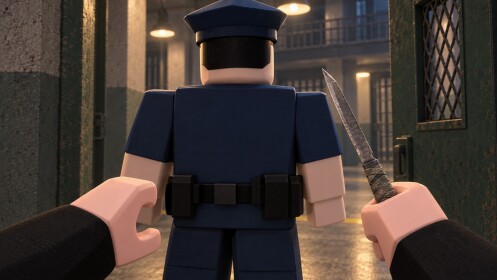
The prison-mystery premise
The description states the central mystery directly: 'Something strange happens after lights out. Prisoners are taken behind the STAFF ONLY door... and they don't come back the same.' It then gives the goal that follows from it: 'Escape before it's your turn.'
That is the premise, not a step-by-step scene. The description tells you what is happening in the prison and why you cannot simply serve your time; it leaves the door itself as the thing you are escaping from. The distinction matters when you are looking for story content in play: the store page sets the threat, while the game shows you the prison routine and the escape work that the threat drives.
In short, this is not just a prison break. The escape is a response to a specific horror-tinged mystery, and the warning about your turn is the pressure that frames the routine, the shopping and the digging.
Day and night: how the game frames a run
The description also includes a line of framing: 'Act normal by day. Plan your escape by night.' That split explains the shape of a session. Daytime is the prison routine — roll call, jobs, the library desk, earning cash. Night is when the escape plan is supposed to come together.
The description backs that up with the systems it lists: prison jobs, cash and OJ's Deals for tools; hiding tools, moving the toilet and digging out; exploring dark tunnels to uncover the prison's secrets; and staying ready for roll call while avoiding guards and CCTV and keeping suspicion low. Read together, those lines describe a double life: look ordinary on the surface, prepare the breakout underneath.
Story events and clues you can see while playing
The premise is on the store page; the concrete story material is in the game. These are the story-related events and visual details visible in the opening stretch of a run, and what each one connects to.
| Moment | What you see | What it connects to |
|---|---|---|
| Opening cut-scene | Your character takes bread from a store and is arrested by police. The screen fades to black, then a wake-up animation plays. | Frames how you ended up in Cell 13. It is presentation, not a repeatable gameplay loop. |
| First wake-up in the cell | You wake on a cell bunk. Posters of a drill and a knife hang on the wall, a guard NPC stands outside, and an orange-jumpsuit NPC with a cash bubble is nearby. | Your first clear look at the cell and the escape-themed detail around it. |
| Cell door and roll call | The cell door opens, a ROLL CALL alert appears, and an objective panel shows in the top right. | Moves you from the cut-scene into the prison routine and gives you the next objective. |
| Library job | The desk guard shows requested book numbers; in one session they were #106, #032 and #140. You pick up each numbered book with E and deliver it to the desk. | Shows the job loop and the cash that supports buying tools. |
| 'Day 2' transition | A black screen shows typewriter text reading 'Day 2'. You wake and the roll call and library loop repeats, with deliveries such as #043. | Marks the observed transition into Day 2. |
| Toilet tunnel | You crouch at the toilet base, use the screwdriver to 'Unscrew' the bolts, and choose 'Move aside'. A vertical tunnel opening appears, and you jump in with the power drill. | Turns your own cell into the start of the escape route. |
| Lunch at OJ | You return to OJ but do not have enough cash, then collect cash stacks left on other inmates' beds. | Shows the cash economy that gates the tools you need. |
The opening cut-scene: bread, arrest and wake-up
The first story beat is a short cut-scene. Your character takes bread from a store, police arrest them, the screen fades to black, and a wake-up animation plays. It explains how you ended up in prison, then hands control back to you in the cell.
Treat this as presentation rather than a gameplay loop. You are not replaying the arrest, and it does not introduce a mechanic you need to repeat. Its job is to set up the prison story and get you to the bunk.
Your cell: the first in-game clues
You wake on a cell bunk. The wall has posters of a drill and a knife, a guard NPC stands outside, and an orange-jumpsuit NPC with a cash bubble is nearby. Then the cell door opens, a ROLL CALL alert appears, and an objective panel appears in the top right.
This is the first place where the prison story and the escape route touch. The cell is where the game starts you, and it is also the room you will later alter to get out. The posters set the escape theme early, and the cash bubble on the nearby inmate is the first sign of the cash economy the description describes. For the room itself, the Cell 13 guide goes further.
The daily loop: roll call, numbered books and 'Day 2'
The library job is the clearest early example of the routine. The guard at the desk displays the requested book numbers — in one session, #106, #032 and #140. You find each numbered book on the shelves, pick it up with E, and deliver it to the desk. Each delivery gives 10 cash.
The numbers vary from request to request; the pattern stays the same. That is the daytime side of 'act normal by day': you work a prison job, follow instructions and earn the cash the escape depends on. The prison jobs guide covers the job loop in more detail.
At the transition to the next day, a black screen with typewriter text reading 'Day 2' appears. You wake, and the roll call and library loop repeats, with deliveries such as #043. In the reviewed session, the reset showed the roll call and library loop repeating at the "Day 2" transition; the evidence does not establish a fixed daily schedule, the number of days, or the game's length. The prison routine and day/night cycle pages cover the cycle itself.
The toilet tunnel and the promise of dark tunnels
The escape route starts in your own cell. You crouch at the base of the toilet, use the screwdriver to 'Unscrew' the bolts, then choose 'Move aside'. The toilet moves and reveals a vertical tunnel opening. You jump in with the power drill and hold the left mouse button to drill through the dirt walls.
That is the concrete version of the description's line 'Hide your tools, move the toilet, and dig your way out.' The description also says you can 'Explore dark tunnels and uncover the prison's secrets'. The toilet shaft is the digging route visible in the opening stretch; the move toilet, digging and tunnels guides follow that thread in more detail.
Cash and OJ's Deals: the economy behind the story
Money is part of the story framing, not just a score. The description says you work prison jobs, earn cash, and buy tools from OJ's Deals. The library job shows the earning side: 10 cash for each delivered book. Later, at lunch, you go back to OJ but do not have enough cash, so you collect cash stacks left on other inmates' beds in the cell block.
That sequence is the whole loop in miniature. The escape needs tools, the tools come from OJ's Deals, and the cash for them comes from working the routine and picking up what you can find. Before anything strange happens after lights out, you are still an inmate working a job and saving up. The money guide and OJ's Deals shop cover the buying side.
The premise versus the playable story
It helps to keep two layers separate when you play. The description's mystery layer is the STAFF ONLY door, the lights-out incident in which prisoners are taken behind it and do not come back the same, and the warning that you need to escape before your turn. The playable layer in the opening is the arrest cut-scene, the cell, roll call, the library job, the 'Day 2' loop and the toilet tunnel.
The description sets the threat; it does not walk you through a specific lights-out scene. In the opening stretch, the story you see is the prison routine and the escape being built inside it. The STAFF ONLY door is the promise hanging over that routine. For the door itself, see the staff only door guide.
Keeping the act: guards, CCTV and suspicion
The last piece of the premise is about behaviour. The description says to stay ready for roll call, avoid guards and CCTV, and keep your suspicion low. Those are the systems that make 'act normal by day' mean something: the prison is watching, and the escape is something you do while looking like you are not doing anything.
That is also why, in the opening stretch, the story you see is made of ordinary prison moments — a desk job, a lunch trip, a roll call — which is what makes the escape work feel hidden. The stealth guide and suspicion guide cover those systems, and the escape plan puts the route together.
The official description also notes that the game can be played solo or with up to 3 friends. For the complete route, see the full walkthrough.
Related Guides
STAFF ONLY Door
What the game's own description reveals about the door prisoners are taken behind after lights out.
Cell 13 First Steps
What your cell contains at wake-up, which items matter first, and how to start your escape project.
Day-Night Cycle and HUD
What each clock phase changes in the prison and how to read the HUD objective panel at a glance.